
Autonomic Testing for Syncope & Presyncope
When Syncope Remains Unexplained, Look at the Physiology Behind the Event.
Syncope and presyncope are common reasons for cardiovascular evaluation. The challenge is that transient loss of consciousness or near-loss of consciousness can have multiple causes, including cardiac arrhythmias, structural cardiovascular disease, reflex mechanisms, orthostatic hypotension, volume depletion, medication effects, and autonomic dysfunction.
For that reason, autonomic assessment should be viewed as part of a broader diagnostic strategy—not as a replacement for the standard syncope workup.
Physio PS is FDA 510(k) cleared and designed for use by physicians and healthcare providers.
Start With the Standard Evaluation
Guidelines recommend a structured initial evaluation that includes a detailed history and physical examination, assessment of risk, and a 12-lead ECG.
Depending on the presentation, additional evaluation may include:
Orthostatic blood-pressure and heart-rate measurements
Ambulatory or implantable rhythm monitoring
Echocardiography or other cardiac imaging when indicated
Laboratory testing when appropriate
Tilt-table testing
Autonomic evaluation
Exercise testing
Electrophysiologic evaluation in selected patients
Neurologic evaluation when clinically indicated
The objective is to determine whether the episode is most consistent with cardiac, reflex, orthostatic, neurologic, medication-related, metabolic, or another cause.
When Exercise Intolerance Raises Additional Questions
A cardiologist may encounter patients who report:
Reduced exercise capacity
Disproportionate fatigue with activity
Excessive heart-rate response
Poor heart-rate recovery
Lightheadedness during or after activity
Exercise-associated palpitations
Post-exertional worsening of symptoms
Exercise intolerance despite relatively reassuring conventional cardiac findings
These symptoms have many potential causes and require appropriate clinical evaluation.
Conventional Exercise Evaluation Still Matters
Depending on the patient, evaluation may include:
History and physical examination
ECG
Echocardiography
Exercise stress testing
Cardiopulmonary exercise testing
Rhythm monitoring
Laboratory evaluation
Pulmonary evaluation
Assessment of conditioning and other contributing factors
Autonomic assessment should complement—not replace—these established approaches when they are clinically indicated.

What It May Add
Quantitative Autonomic Information
Adds information about autonomic activity to the broader clinical picture.
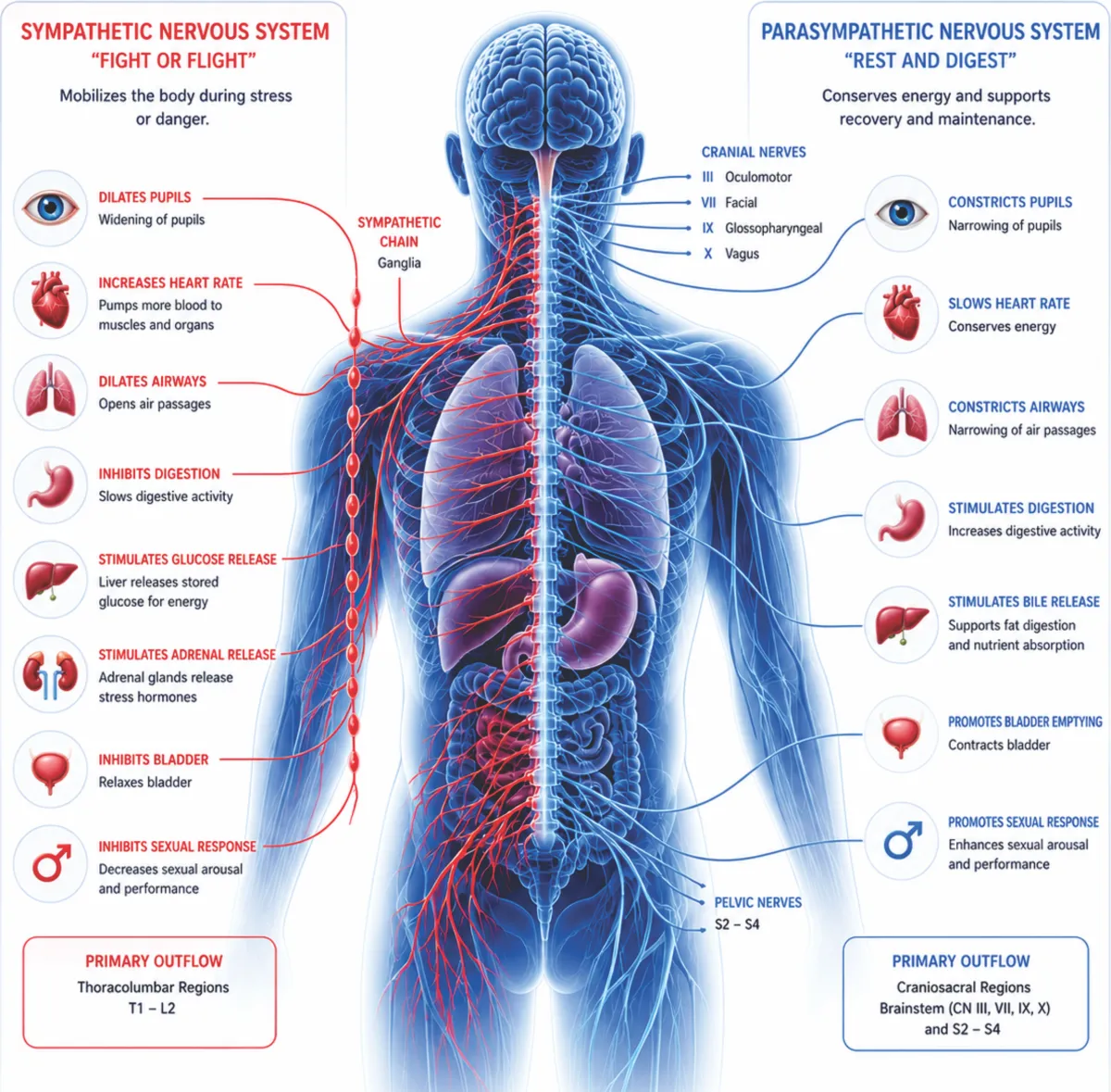
Parasympathetic & Sympathetic Assessment
Evaluates the two branches independently rather than relying solely on heart rate or a single autonomic metric.
Heart Rate & Blood Pressure Context
Provides cardiovascular measurements alongside autonomic information.
Potential Longitudinal Comparison
Provides a quantitative baseline that may be useful for comparison during subsequent assessments when clinically appropriate.
When Might a Cardiologist Consider It?
Physio PS is not intended to replace standard cardiovascular evaluation.
Instead, it can provide another source of quantitative physiologic information when the clinician is considering whether autonomic regulation may be contributing to the patient's presentation.
Autonomic assessment may be worth considering when:
Syncope remains unexplained after appropriate initial evaluation
Presyncope occurs repeatedly
Symptoms are strongly associated with standing
Dizziness occurs with changes in posture
Heart rate or blood pressure behaves unexpectedly with positional or physiologic changes
POTS, orthostatic intolerance, or reflex syncope is being considered
The patient has persistent symptoms despite an otherwise unrevealing cardiovascular evaluation
The Goal Is Not Simply to Label the Episode.
The goal is to better understand the physiology surrounding it.
When Syncope Is Difficult to Explain, Consider the Autonomic Component.
© Copyright 2026 Physio PS, Inc.-All rights reserved.