
Autonomic Assessment for Unexplained Tachycardia
When the Heart Rate Is Fast, Ask Why.
Tachycardia is a finding, not a diagnosis.
A fast heart rate may be an appropriate response to exercise, illness, fever, pain, dehydration, anemia, medications, emotional stress, or other physiologic demands. It may also occur with arrhythmias, POTS, inappropriate sinus tachycardia, autonomic dysfunction, or other cardiovascular conditions.
For cardiologists, the important question is not simply:
“How fast is the heart rate?”
The question is:
“What is driving the heart-rate response?”
Physio PS is FDA 510(k) cleared and designed for use by physicians and healthcare providers.
Start With the Basics
Evaluation of unexplained sinus tachycardia typically begins with:
History and physical examination
12-lead ECG
Review of medications and substances
Assessment for reversible causes
Laboratory evaluation when appropriate
Rhythm monitoring when indicated
Evaluation for structural heart disease when appropriate
Physio PS can better help you understand the physiology behind the tachycardia in a non-invasive, 15-minute monitoring session.
POTS and Inappropriate Sinus Tachycardia Are Not the Same
POTS and inappropriate sinus tachycardia can produce similar symptoms, including:
Palpitations
Fatigue
Exercise intolerance
Lightheadedness
Elevated heart rate
However, the triggers and clinical patterns can differ.
POTS is characteristically associated with upright posture, while inappropriate sinus tachycardia may occur with physiologic and emotional stress as well as at rest.
This distinction is important when evaluating patients with persistent tachycardia.
Where Autonomic Assessment May Help
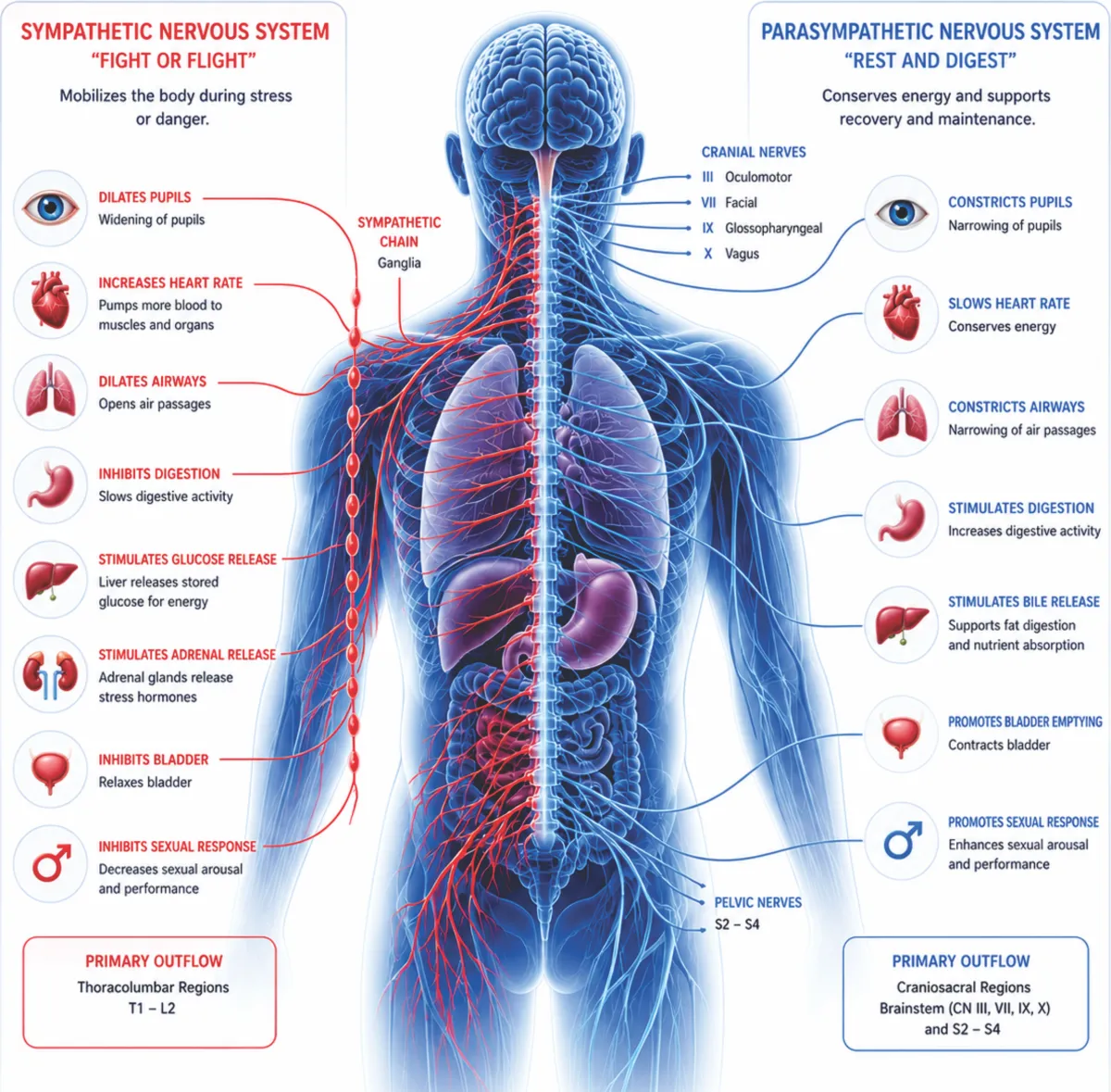
The autonomic nervous system is deeply involved in cardiovascular rate regulation.
Sympathetic activation can increase heart rate and contractility, while parasympathetic activity generally slows cardiac rate and contributes to cardiovascular recovery.
Physio PS is designed to provide quantitative information about these two autonomic branches.
Its approximately 15-minute non-invasive assessment independently and simultaneously evaluates parasympathetic and sympathetic activity.

What This Adds to the Evaluation
Physio PS does not replace ECG or rhythm monitoring.
Instead, it may provide another physiologic dimension for selected patients whose tachycardia remains difficult to characterize.
The clinician may be able to consider:
Heart Rate
What is the observed cardiovascular response?
Symptoms
When does the tachycardia occur?
Postural Relationship
Is it associated with standing or other changes in physiologic demand?
Autonomic Activity
What additional information is available regarding parasympathetic and sympathetic regulation?
Longitudinal Change
Can quantitative autonomic information be compared over time when repeated assessment is clinically appropriate?
Patients Who May Deserve a Closer Look
Physio PS is not intended to replace standard cardiovascular evaluation.
Instead, it can provide another source of quantitative physiologic information when the clinician is considering whether autonomic regulation may be contributing to the patient's presentation.
Consider an autonomic component when a patient presents with:
Persistent sinus tachycardia without an obvious cause
Palpitations with otherwise unrevealing rhythm evaluation
Tachycardia associated with standing
Suspected POTS
Possible inappropriate sinus tachycardia
Tachycardia accompanied by dizziness or presyncope
Tachycardia accompanied by exercise intolerance
Persistent symptoms despite evaluation for common reversible causes
More Than a Heart-Rate Number
A heart rate tells you what the heart is doing.
Autonomic assessment can provide additional information about the regulatory system influencing that response.
When Tachycardia Doesn't Have an Obvious Explanation, Consider the Autonomic Component
© Copyright 2026 Physio PS, Inc.-All rights reserved.