
AUTONOMIC MONITORING FOR CARDIOLOGY
The Rhythm Is Normal. So Why Does the Patient Still Feel Terrible?
The missing piece may be how the autonomic nervous system is regulating the cardiovascular response.
When patients continue to experience dizziness, syncope, palpitations, unexplained tachycardia, orthostatic symptoms, or exercise intolerance, routine cardiac findings may not explain the full clinical picture.
Physio PS adds quantitative autonomic information to your assessment, independently and simultaneously evaluating parasympathetic and sympathetic activity in an approximately 15-minute, non-invasive monitoring session.
The Physio PS SaMD is FDA 510(k) cleared and designed for use by physicians and healthcare providers for non-invasive monitoring of the autonomic nervous system*.
Which Patients Are You Still Trying to Explain?
Think About Your Last 10 Difficult Patients.
How many continued to experience symptoms that were not fully explained by the initial cardiovascular evaluation?
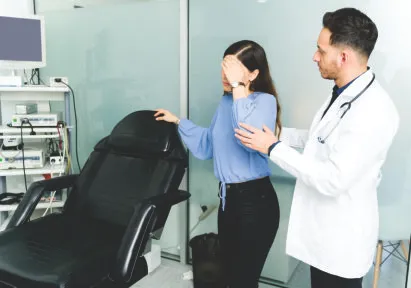
Syncope and Presyncope
When fainting or near-fainting remains unexplained and autonomic involvement warrants evaluation.

Unexplained Tachycardia & Palpitations
When heart-rate behavior and reported symptoms require a broader physiologic assessment.

Orthostatic Symptoms and BP Dysregulation
When symptoms or blood-pressure changes suggest that autonomic regulation deserves consideration.

Exercise Intolerance & Persistent Symptoms
When the patient continues to struggle despite an evaluation that has not fully explained the presentation.
Physio PS is designed to provide additional quantitative information about the autonomic nervous system that can complement the broader clinical assessment.
What Makes Physio PS Different
Physio PS Is Not The HRV You Know
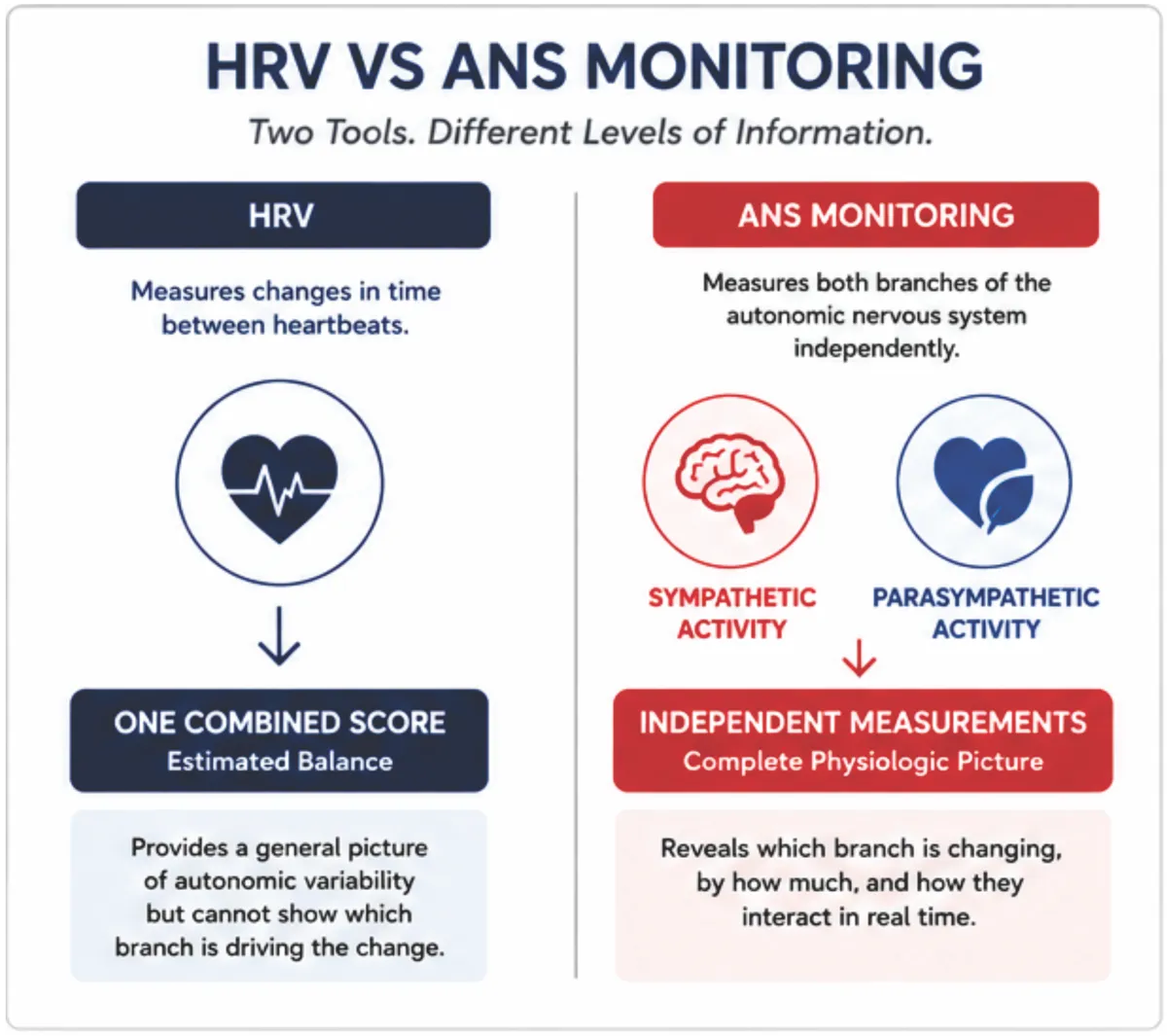
HRV vs ANS Monitoring
Two Valuable Tools.
Different Levels of Information.
Heart Rate Variability and Autonomic Nervous System monitoring both evaluate autonomic function, but they answer different clinical questions.
HRV measures changes in the timing between heartbeats and summarizes autonomic activity into a single value or group of derived metrics.
ANS monitoring evaluates the activity of both branches of the autonomic nervous system independently, allowing clinicians to understand not only whether autonomic dysfunction exists, but which branch is responsible.
HRV Is One Measurement.
Autonomic Regulation Is a Broader Picture.
Physio PS adds quantitative information about the two primary branches of the autonomic nervous system.
Parasympathetic Activity
Quantitative information about the autonomic branch involved in regulating restorative and slowing responses.
Sympathetic Activity
Quantitative information about the autonomic branch involved in activation and cardiovascular response.
What the physician can review
Parasympathetic and sympathetic activity assessed independently and simultaneously.
Heart-rate and blood-pressure information collected as part of the assessment.
Quantitative findings to consider alongside the patient's symptoms, history, examination, and other testing.
A baseline that may support comparison with subsequent assessments when clinically appropriate.
Physio PS complements the standard cardiovascular evaluation; it does not replace indicated cardiac testing or clinical judgment.
MORE THAN A HEARTBEAT. IT'S A SYSTEM.

From Patient Presentation to Clinical Interpretation
01
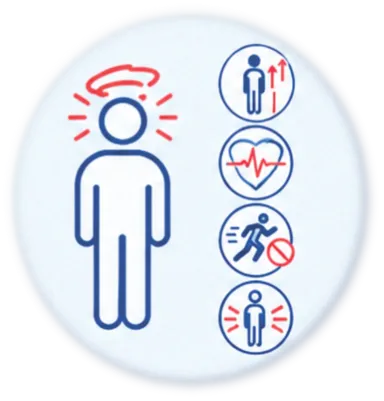
Identify An Appropriate Patient
A patient presents with syncope, presyncope, orthostatic symptoms, unexplained tachycardia, exercise intolerance, or other symptoms for which autonomic involvement is a reasonable consideration.
02
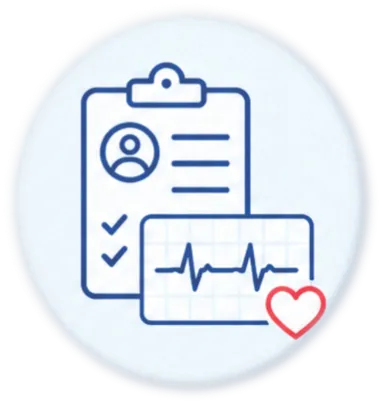
Complete The Standard Clinical Evaluation
Review the patient's history, examination, ECG, and other cardiovascular tests indicated by the clinical presentation.
03
Perform The Autonomic Assessment
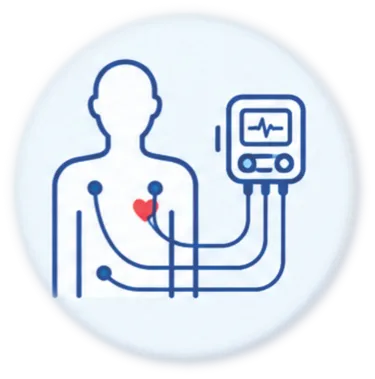
Conduct the approximately 15-minute, non-invasive Physio PS monitoring session.
04

Review The Quantitative Report
Examine the autonomic measurements and associated physiologic information in the context of the patient's overall clinical picture.
05

Determine
The Appropriate Next Steps
Use the findings alongside other clinical information to inform further evaluation, treatment planning, referral, or follow-up when indicated.
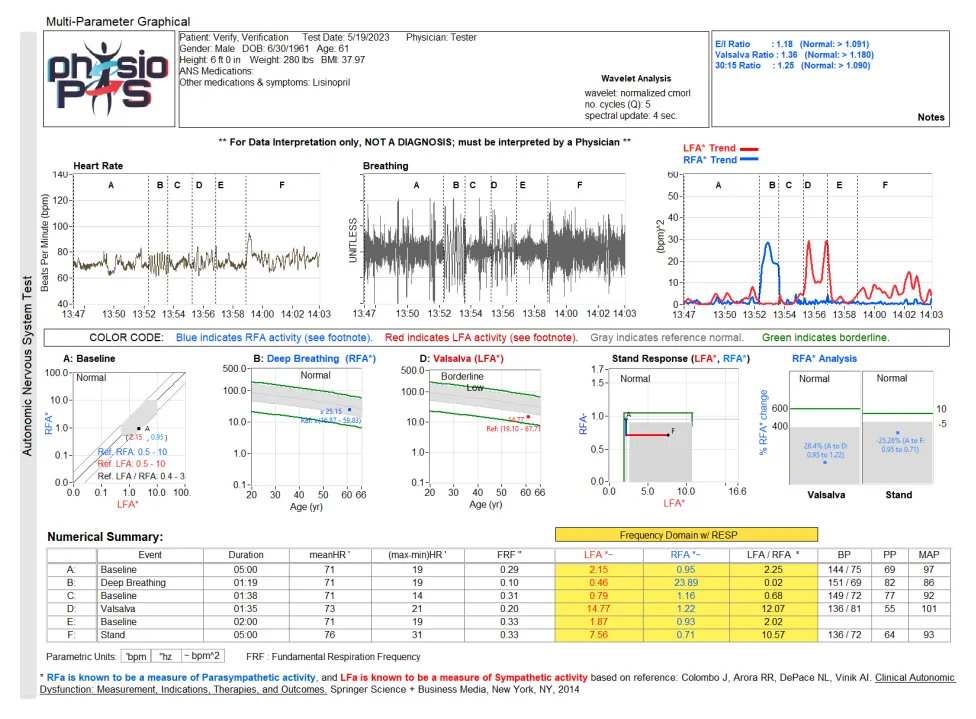
What the Physician Sees:
Parasympathetic Activity
Sympathetic Aactivity
Heart Rate
Blood Pressure
Autonomic Response
Quantitative Measurements
Clinical Interpretation
What Cardiologists and Electrophysiologists Are Saying
We're incredibly proud of the positive impact our products have made!
Letters of Recommendation
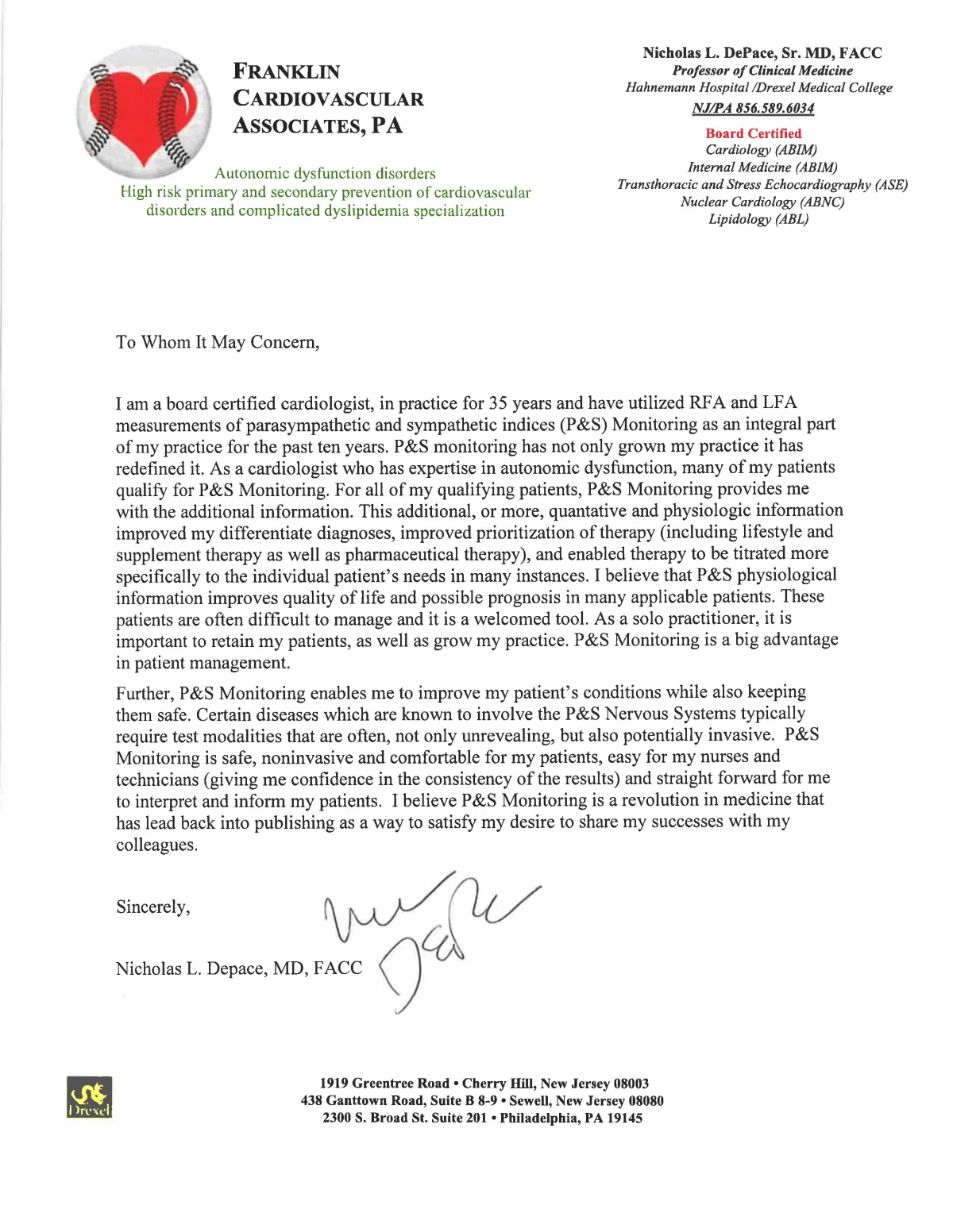
Nicholas L. DePace, Sr.
MD, FACC,
Professor of Clinical Medicine, Hahnemann Hospital/Drexel Medical College

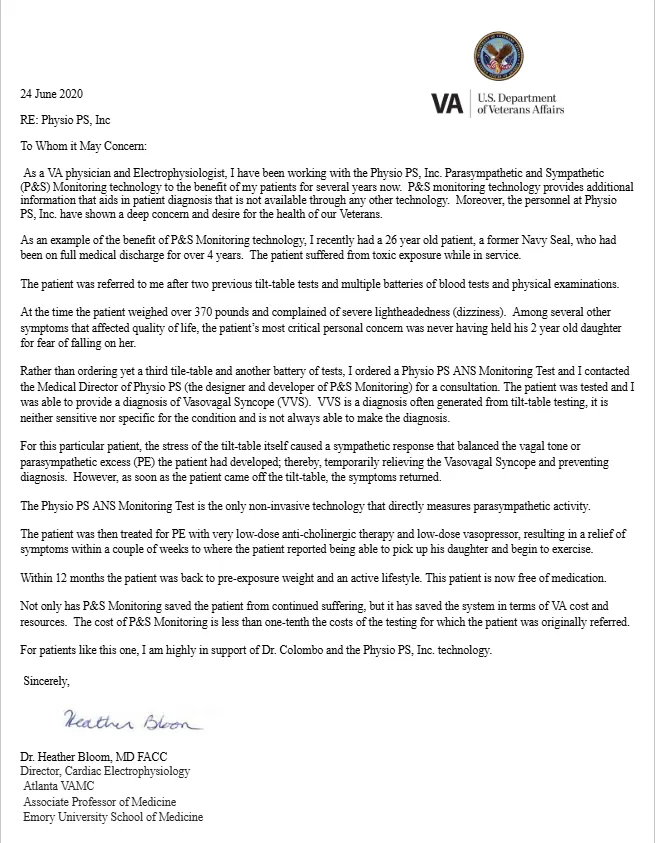
Heather Bloom
MD, FACC, Director of Cardiac Electrophysiology, Atlanta VAMC Associate Professor, Emory University School of Medicine
Gary Murray
MD, FACC
Director, Cardiac Electrophysiology
Atlanta VAMC
Associate Professor of Medicine
Emory University School of Medicine
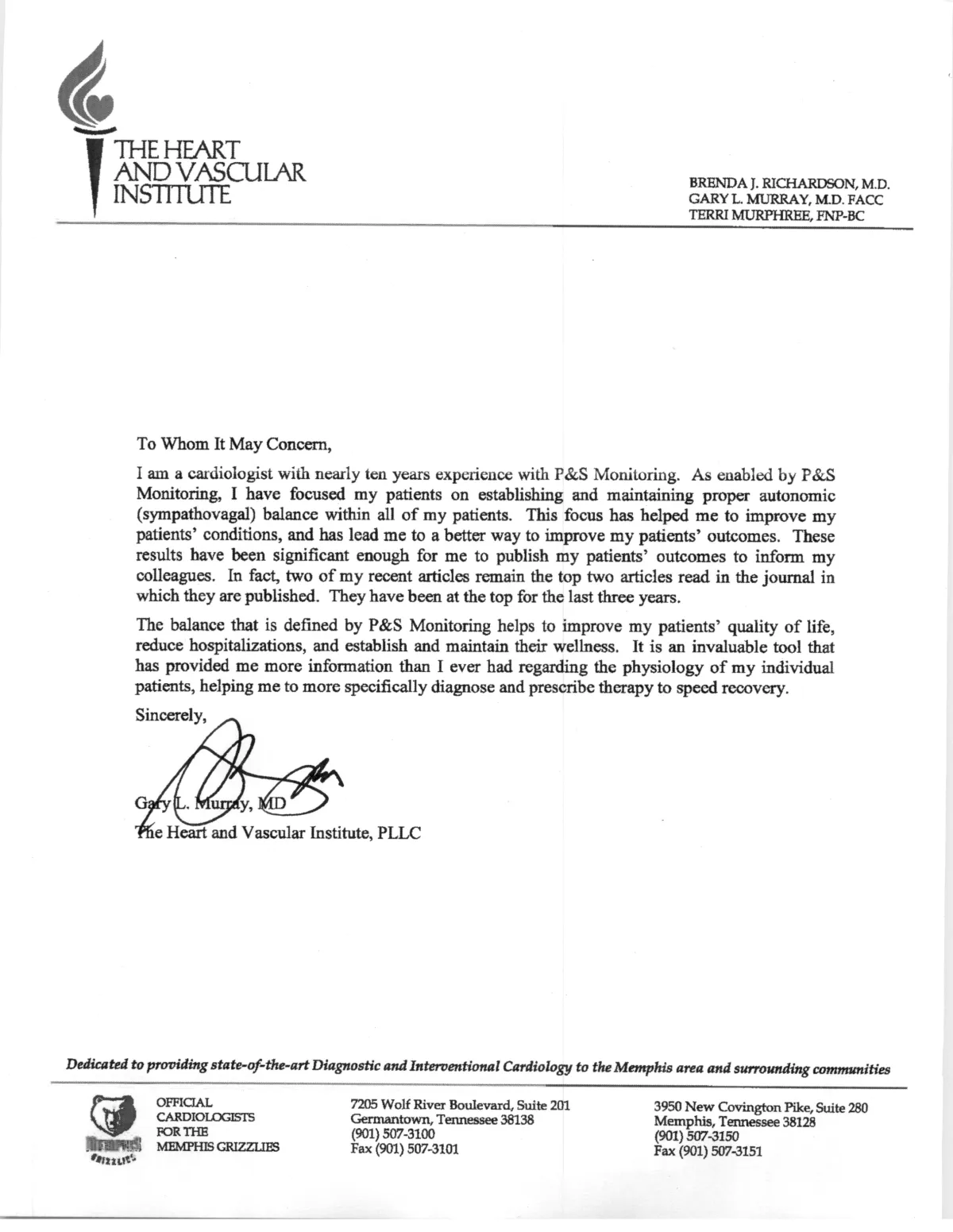
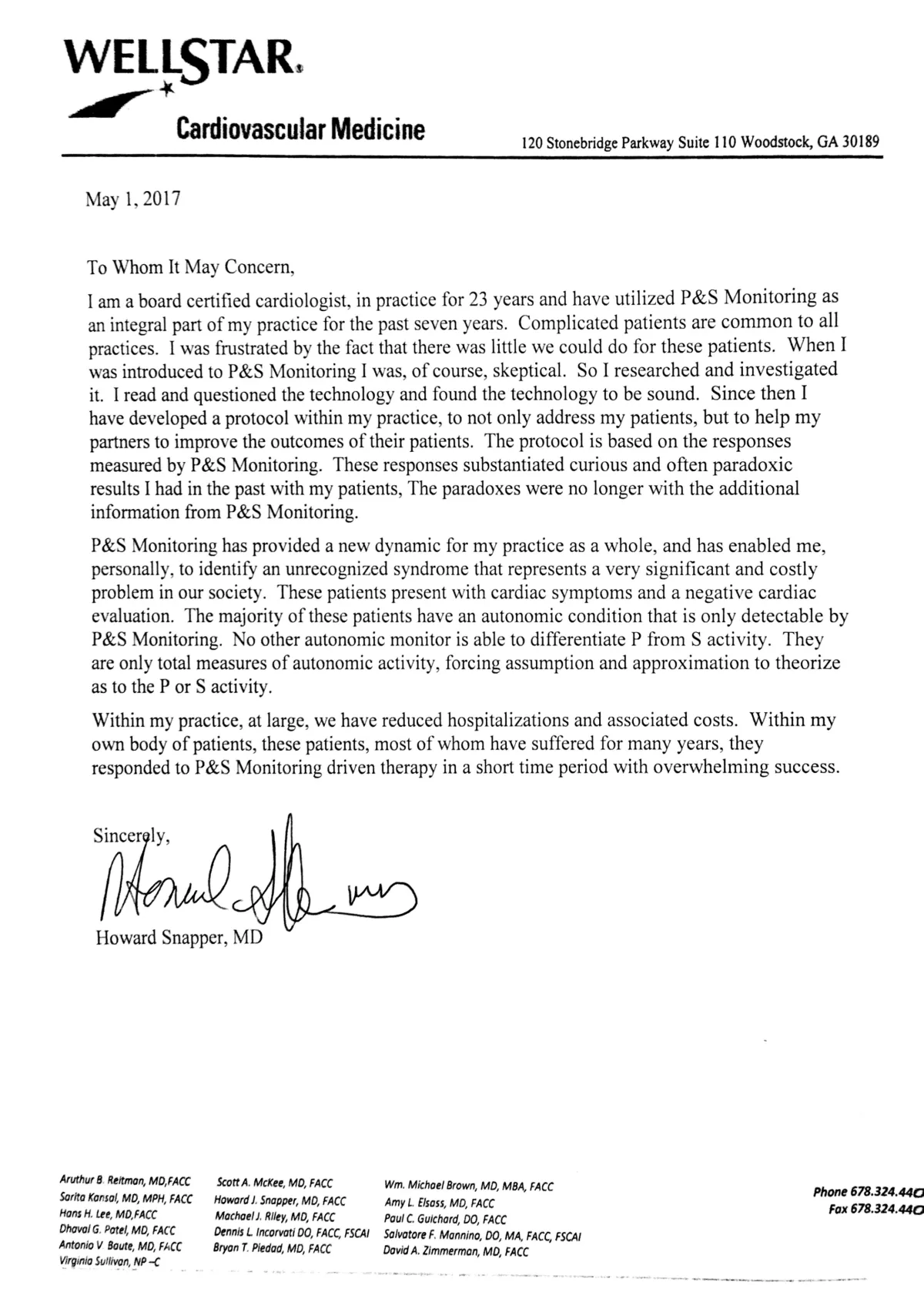
Howar Snapper
MD, FACC
Interventional Cardiologist WellStar Cardiovascular Medicine
Director of the Autonomic Disorders Division
American Autonomic Society
The Application
Choose the Configuration That Fits Your Practice.
Physio PS offers multiple monitoring configurations. The right choice depends on your clinical setting, workflow, staffing, and intended use.
Clinical Monitoring Unit
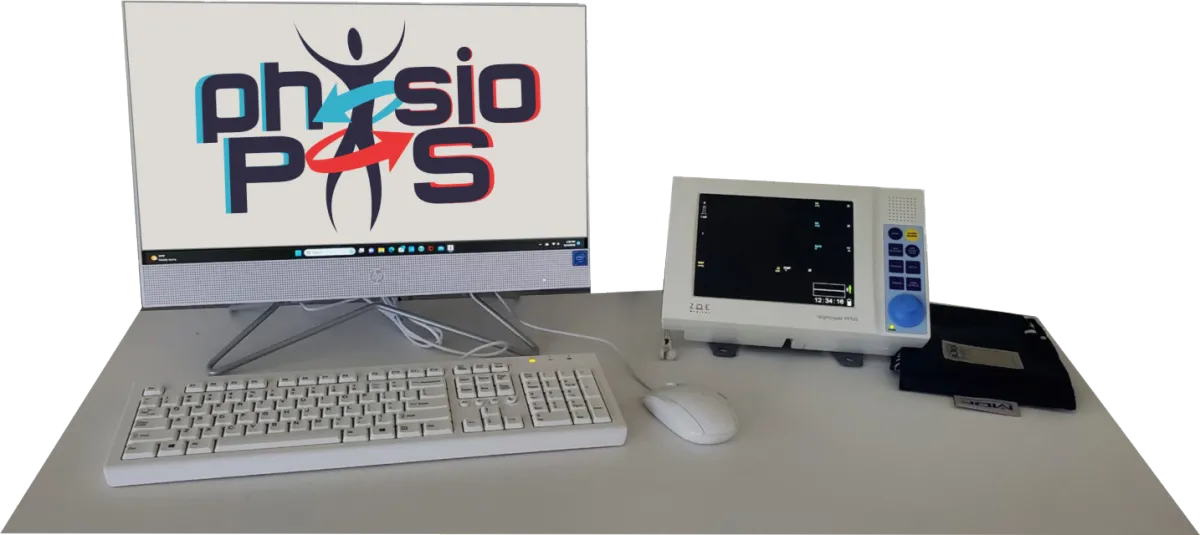
The perfect addition to any clinic
Offer your patients greater insight
Enhance preventive health measures
The Best ANS Test increases revenue
Many purchase options
FDA 510(k) Cleared
Supported by fundable billing codes
Research options available
Remote Monitoring Unit
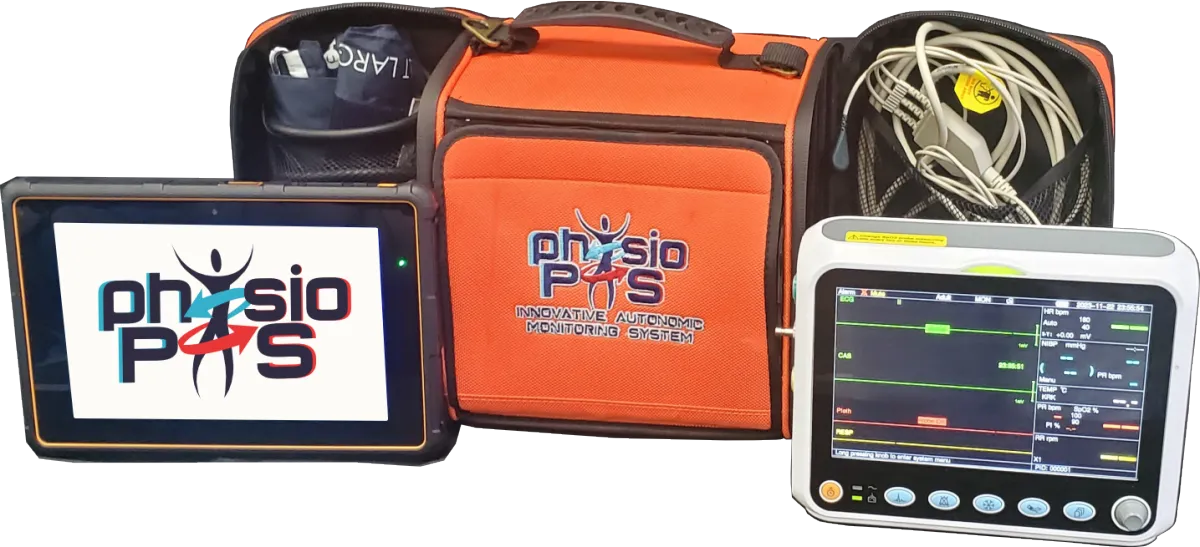
Bring The Best ANS Test on the go
Improve quality of life
Compact and Convenient
Operates with battery power
The Best ANS Test increases revenue
Great for in-home care providers
Perfect for sports medicine
Many purchase options
Portable Autonomic Lab
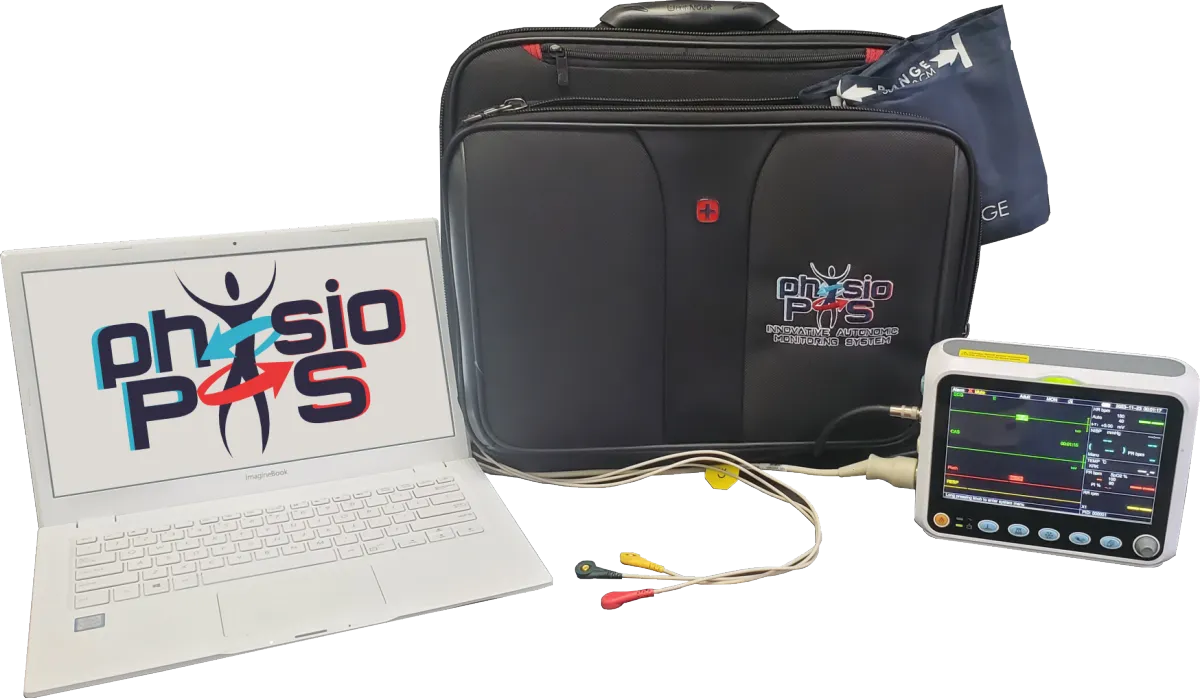
Portable & deployable
Prefect for the clinician on the go
The Best ANS Test available anywhere
Multiple power options
Compact and convenient
Offer patients more personalized care
The Value
Physio PS gives cardiologists another measurable dimension of cardiovascular physiology.
You already assess cardiac function.
Consider whether autonomic dysregulation may also be influencing the patient's symptoms and clinical presentation.
Is Physio PS FDA cleared?
Yes, the technology has U.S. FDA 510(k) clearance.
How long does the test take?
The monitoring session takes approximately 15 minutes, with additional time required for patient preparation, setup, interpretation, and documentation.
What does Physio PS measure?
It independently and simultaneously evaluates parasympathetic and sympathetic activity and provides associated quantitative physiologic information, including heart-rate and blood-pressure data as applicable to the system's approved configuration.
Does it replace ECG, imaging, or other cardiac tests?
No. Physio PS is intended to provide additional information about autonomic regulation and should complement the broader clinical evaluation.
Is training provided?
Yes.
Can it be used for follow-up monitoring?
The system can be used for follow-up assessments when clinically appropriate; reimbursement and medical-necessity requirements should be followed. CMS guidance addresses repeat testing in the context of clinical status or response to therapy.
What does the system cost?
Every practice has different needs. We’ll work with you to identify the Physio PS system configuration that best fits your clinical goals and practice requirements. After a brief conversation with our team, you’ll receive a personalized quote along with available financing options and terms—so you can make an informed decision about bringing advanced autonomic monitoring into your practice.
How do I know whether it will work in my practice?
Start with a physician demonstration. Review a sample report, discuss appropriate patient applications, and evaluate workflow, staffing, utilization, and financial assumptions before making a purchase decision.
Is it invasive?
No. The monitoring is non-invasive.
What about reimbursement?
Current billing codes are 95942 and 95941. (Actual billing/coding guide and clearly distinguish coding availability from payer coverage.)
Physio PS can provide additional information to improve diagnostic capability and prioritize therapy planning across multiple disease areas.
Physio PS is not intended to replace the standard cardiovascular evaluation. It provides additional information about autonomic regulation that can complement the broader clinical assessment.
Expanded Topics

Autonomic Testing for Complex Symptoms
When the clinical picture doesn't fully match the initial findings.

Autonomic Testing for Syncope & Presyncope
When the cause isn't immediately clear and autonomic mechanisms are being considered.
POTS & Autonomic Testing for Cardiology
When evaluating patients with suspected autonomic involvement.
Autonomic Assessment for Orthostatic Intolerance
When symptoms occur with standing or positional changes.

Autonomic Assessment for Unexplained Tachycardia
When heart-rate behavior doesn't appear to tell the entire story.

Autonomic Function & Exercise Intolerance
When symptoms persist despite conventional evaluation.
YOUR NEXT STEP
See How Physio PS Could Fit Into Your Cardiology Practice.
In a focused physician demonstration, we'll show you what the system measures, what the report looks like, how autonomic assessment may fit into your clinical workflow, and what to consider when evaluating the investment.
See the physician report
Understand the measurements and reporting workflow.
Identify appropriate clinical applications
Discuss the patient presentations relevant to your practice.
Review your purchase options
Compare configurations, training, implementation, pricing, and potential practice economics.
The Solution
Your Patients Are Complex. Your Assessment Should Be Comprehensive.
Physio PS gives cardiologists and electrophysiologists another way to quantify autonomic function when it is relevant to the clinical picture.
By combining appropriate patient selection, quantitative assessment, physician interpretation, and follow-up when indicated, your practice can evaluate whether autonomic monitoring belongs in its diagnostic and management workflow.
Understand the clinical application. Evaluate the workflow. Justify the investment.
15-Minute Monitoring
A non-invasive monitoring session designed to fit into clinical workflows.

Quantitative P&S Assessment
Parasympathetic and sympathetic activity are evaluated independently and simultaneously.

Objective Baseline
Establish quantitative autonomic information that can be followed over time.
Progress Monitoring
Use repeated assessments to evaluate changes over the course of care.

Practice Integration
Physio PS offers a monitoring unit, with training and certification included**.
Physio PS can provide additional information to improve diagnostic capability and prioritize therapy planning across multiple disease areas.
Are You Missing Out?
Why Add Physio PS to Your Practice?
Physician Challenge
Patient isn't responding as expected
Solution: Obtain additional quantitative information about autonomic function.
Physician Challenge
Symptoms don't match routine findings.
Solution: Consider whether autonomic regulation may be contributing to the clinical picture.
Physician Challenge
The presentation is complex.
Solution: Characterize autonomic patterns alongside the broader clinical assessment.
Physician Challenge
You need an objective baseline.
Solution: Establish quantitative measurements that may be compared over time when clinically appropriate.
See What Physio PS Can Add to Your Cardiology Practice.
Your Patients Are Complex.
Your Assessment Should Be Comprehensive.
Bring Autonomic Assessment Into Your Practice
Start With a Conversation
We'll show you:
How the assessment works
What the physician sees
Where it fits into a cardiology workflow
What training is involved
Available monitoring configurations
Implementation considerations
How practices can use the information clinically
Key Practice Integration Points
FDA 510(k) cleared
Approximately 15-minute assessment
Non-invasive monitoring
Physician-focused reporting
Training and certification
Clinical workflow integration
Multiple monitoring configurations
Support for implementation
© Copyright 2026 Physio PS, Inc.-All rights reserved.